
Why More Healthcare Workers are Moving Into the Private Home Care Sector
It’s not just the pay (although that plays a role). It’s the fact that efficiency is routinely prioritized over efficacy in almost every aspect of current hospital staffing and management models.
The one-on-one model changes everything
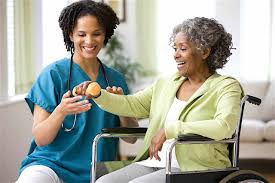
The caregiver-to-client ratio is the most immediate difference. One caregiver, one client. In a ward, your attention is fractured from the moment you clock in. In a home, you show up and your full focus goes to one person. Their morning routine, their medications, their comfort, their mood that day. That narrowing of scope isn’t a limitation. It’s relief.
Continuity of care also looks completely different here. You’re not handing off a patient at the end of a shift to someone who’ll hand them off again. You build genuine knowledge of that person over weeks and months. You notice when something’s off before it becomes a crisis. That kind of observational depth is almost impossible in institutional settings, and it produces measurably better health outcomes for patients managing chronic conditions like COPD or diabetes at home.
Why the work itself is more sustainable
Burnout in a clinic isn’t just about hours – it’s about the emotional math of the job. When you feel invisible because of the requirements of your role inside these giant engine-like institutions, the work isn’t meaningful. It’s just mechanical. And that’s where compassion fatigue takes hold. Home care flips that dynamic. If you are there to help someone with their activities of daily living, to help them eat, get dressed, have a shower, get out of bed, you aren’t a background function. You are the relationship. And the clients and their families notice what you do. They appreciate it. And that matters more than most healthcare administrators would like to admit. The social determinants of health play out in high relief in home care as well. You can see how a person’s living environment, their level of isolation, their nutrition – how all of it is directly helping or hindering their recovery and their quality of life. That kind of view of a patient isn’t really possible when you are trying to manage a bed in a shared ward.
The demographic reality behind job security
The increasing demand for home caregiver jobs is based on simple math and some fundamental truths about healthcare and quality of life.
Home caregiver jobs are expected to increase more rapidly than other related jobs over the next decade because the population in the United States is getting older – the baby boomer generation is aging and living longer. Add to that the fact that people are increasingly choosing to age at home, instead of in assisted living facilities.
When you need some form of caregiving, would you rather be at home or in a clinical facility? Another stark truth driving the industry is this: It is not financially practical to meet the needs of a rapidly growing aging population in traditional clinical environments. Keeping people in their own homes or apartments, with some help from professional caregivers, is just more possible, more humane and more cost-effective.
What the career path actually looks like
A final misperception is that pay is less in home care. Because there’s no shortage of people willing to take a difficult, stressful, low-paid job in a nursing home or hospital, the pay reflects that demand. The home care marketplace, by contrast, rewards experience and skill in those same nursing tasks.
For those looking at home care careers PA, an hour of home care pays more – often significantly more – than an hour of working in a facility.
So, yes, it’s generally true that nursing assistants who go into home care will get hours and hours a week less sponge-bathing clients and will get paid less for each of those hours. But the increase they’ll typically see in hourly rate, as well as the additional hours they can work as clients gain their trust and request them by name, often makes those caregivers who enter home care much more satisfied.
It’s tough work. It’s not for everyone. For the right kind of experienced, high-energy caregiver, though, it’s not just the most rewarding kind of care – it’s a competitive job in a growth market, with significant opportunities for true career growth.
READ MORE : The Growing Business of Motorcycle and Vehicle
Reclaiming the reason you started
Many people who choose a career in healthcare are driven by a sense of purpose – the real human connection, knowing that their work may have helped someone through a rough day. Home care is one area where this aspect of the job continues to be present. The foundation of the field may be evolving and pay rates changing but the essence of the job and how it aligns with caregivers’ initial career aspirations has largely remained constant. This is why, for many, this change feels less like a step back and more like a necessary adjustment.