
The Future of Autonomous AI Workflows
Artificial intelligence has already transformed how organizations analyze data, automate repetitive tasks, and support decision-making. However, the next phase of AI adoption goes beyond simple automation. Businesses are increasingly exploring autonomous AI workflows, systems capable of performing complex tasks, coordinating multiple processes, and making decisions with minimal human intervention. These workflows have the potential to reshape operations across industries by increasing efficiency, improving accuracy, and allowing employees to focus on higher-value work. The future of work may involve networks of intelligent agents collaborating with people and with each other to complete tasks that once required significant manual effort.
Why AgentOps Will Play a Critical Role
As organizations deploy larger numbers of AI agents, managing those systems becomes increasingly important. This is where AgentOps is emerging as a critical discipline. Similar to how DevOps transformed software development and operations, AgentOps focuses on the deployment, monitoring, governance, and optimization of AI agents operating within business environments. Without proper oversight, autonomous systems can become difficult to manage, especially as they take on more responsibilities across multiple departments.
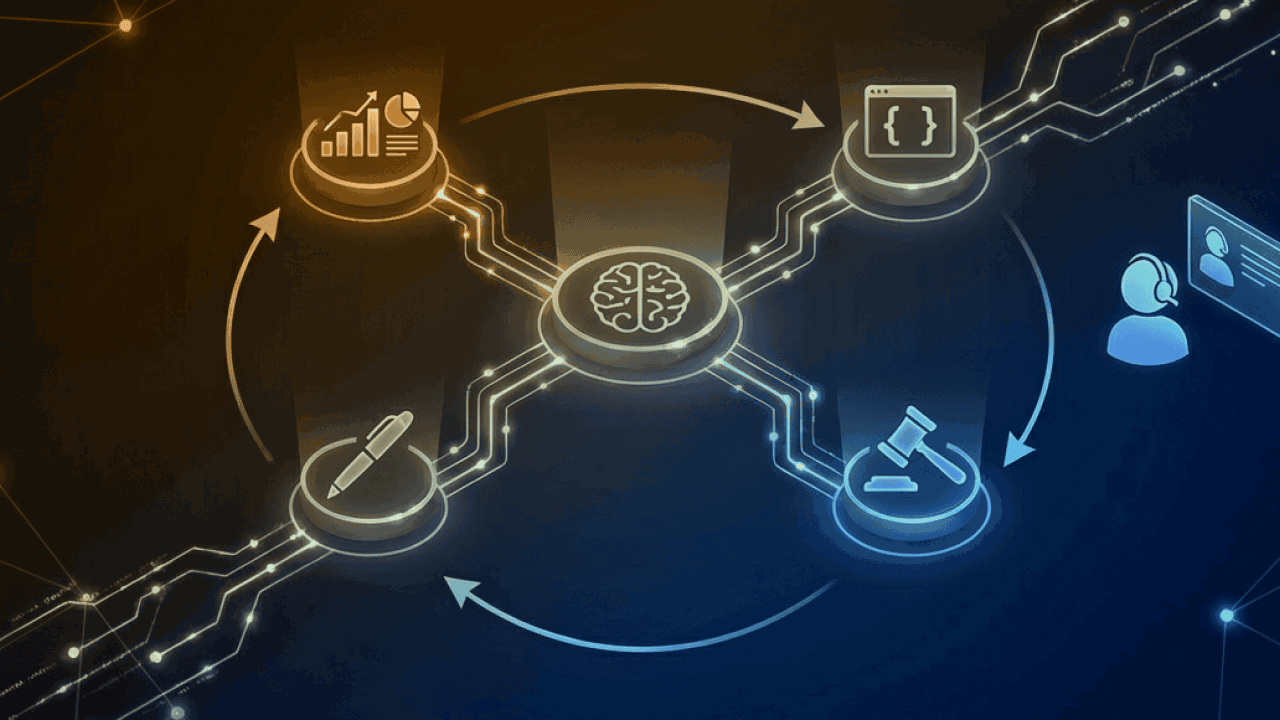
Future AI workflows will likely involve dozens or even hundreds of specialized agents working together to complete tasks. Some agents may handle customer communications, while others analyze data, generate reports, monitor systems, or coordinate business processes. AgentOps frameworks help ensure these systems remain reliable, secure, and aligned with organizational objectives. As autonomous workflows become more sophisticated, organizations will need structured approaches to manage performance, accountability, and continuous improvement.
Building Resilience Through Proactive Infrastructure Management
Autonomous workflows depend heavily on reliable technology infrastructure. No matter how advanced an AI system becomes, its effectiveness is limited by the stability of the environment in which it operates. Organizations investing in AI-driven automation must also prioritize proactive infrastructure management to ensure systems remain available and responsive.
Server monitoring, predictive maintenance, performance analytics, and automated alerting systems all contribute to stronger operational resilience. Rather than reacting to outages after they occur, businesses are increasingly adopting proactive approaches that identify potential issues before they impact operations. This becomes especially important as AI workflows begin handling mission-critical processes.
Moving Beyond Task Automation
Traditional automation focuses on repetitive activities that follow clearly defined rules. Examples include data entry, invoice processing, scheduling, and document management. Autonomous AI workflows represent a significant evolution because they can adapt to changing circumstances, analyze information, and make decisions based on context rather than following a rigid set of instructions.
For example, an autonomous workflow might monitor customer inquiries, prioritize requests based on urgency, gather relevant information from multiple systems, draft responses, escalate complex cases to human employees, and track resolution outcomes. Rather than automating a single step, the workflow manages an entire process from beginning to end.
Human and AI Collaboration Will Define Success
Despite concerns about automation replacing workers, the future of autonomous workflows will likely center on collaboration rather than replacement. Most organizations are discovering that the best results occur when AI systems augment human capabilities rather than operate entirely independently. AI excels at processing large amounts of information, identifying patterns, and executing repetitive tasks, while humans provide judgment, creativity, emotional intelligence, and strategic thinking.
As autonomous workflows become more common, employees may spend less time on administrative work and more time on activities that require human expertise. Customer service professionals can focus on relationship building, analysts can spend more time interpreting insights, and managers can dedicate greater attention to strategic planning. This partnership between humans and AI has the potential to improve productivity while enhancing job satisfaction by reducing routine workloads.
Governance and Trust Will Become Essential
As organizations grant AI systems greater autonomy, governance becomes increasingly important. Businesses must establish clear policies regarding how autonomous workflows operate, what decisions they can make, and how performance is monitored. Trust is a critical factor because employees, customers, and stakeholders need confidence that AI systems are functioning responsibly and accurately.
Transparency will play a major role in building that trust. Organizations will need visibility into how decisions are made, how workflows are performing, and when human oversight is required. Strong governance frameworks help reduce risks related to compliance, security, bias, and unintended outcomes. Companies that establish clear guardrails early will be better positioned to scale autonomous AI initiatives successfully while maintaining stakeholder confidence.
Industry-Specific Applications Will Accelerate Adoption
While autonomous AI workflows can benefit nearly every industry, adoption will likely accelerate through highly targeted use cases. Healthcare organizations may use AI agents to coordinate patient scheduling, documentation, and administrative processes.
Financial institutions could deploy autonomous workflows to monitor transactions, assess risk, and manage compliance requirements. Manufacturing companies may use AI systems to optimize production schedules, monitor equipment performance, and predict maintenance needs. These specialized applications demonstrate how autonomous workflows can solve real-world business challenges while delivering measurable value.