
Common Commercial Roofing Problems Every Property Manager Should Know
A commercial roof rarely fails all at once. It fails one small, ignored problem at a time — a clogged drain here, a lifted flashing edge there — until those small issues compound into a leak, an interior repair, or a full section replacement. The good news is that the same handful of commercial roofing problems show up again and again across buildings, which means they’re also predictable, and largely preventable.
At USA Premier Roofing, we walk roofs across Los Angeles for property managers who are dealing with the same recurring issues, often because they went unnoticed for too long. Here are the commercial roofing problems we see most often, and what preventive commercial roof maintenance can do about each one.
1. Ponding Water
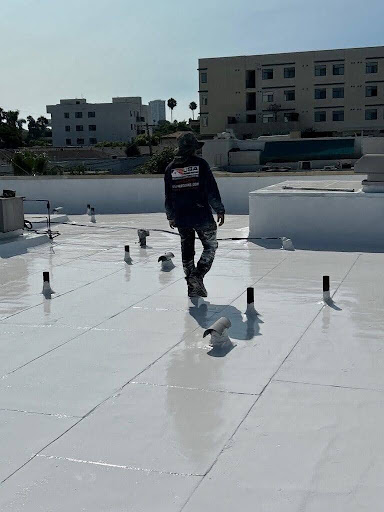
Flat and low-slope commercial roofs are especially prone to ponding — water that pools on the surface instead of draining off. Roofs are generally designed to shed standing water within about 48 hours after rainfall; when water lingers longer than that, it gradually weakens roofing materials and increases the risk of leaks. Ponding is often caused by clogged drains, poor original drainage design, or structural sagging that creates low spots over time. Regular drain clearing and periodic drainage inspections are the most effective way to catch this before it becomes chronic.
2. Roof Leaks and Moisture Intrusion
Many property owners underestimate how far a small leak can travel before it shows up as a stain on a ceiling. Commercial roof leaks rarely stay isolated — water can spread through insulation, walls, and even electrical systems before the visible symptoms appear. Common warning signs include ceiling stains, mold growth, musty odors, and bubbling paint. Because leaks are so often traced back to flashing, seams, or membrane damage discovered well after the fact, catching them early through routine inspection is far cheaper than dealing with the aftermath.
3. Failing or Deteriorated Flashing
Flashing seals the transitions around roof edges, parapets, HVAC curbs, and other penetrations — and it’s one of the most common failure points on any commercial roof, regardless of roofing material. Flashing issues are often difficult to detect from a casual glance, since damage frequently starts as small gaps or loosened seams rather than an obvious tear. Left unaddressed, failing flashing becomes a direct entry point for water.
4. Trapped Moisture
Trapped moisture is one of the more deceptive commercial roofing problems, since it develops beneath the surface, often invisible during a standard rooftop walk. Once moisture gets into a roofing system and has nowhere to drain, it’s just a matter of time before it leads to blistering, insulation damage, and eventually a leak. Infrared scanning and moisture surveys, typically performed as part of a maintenance program, are the primary way to catch this before it spreads.
5. Punctures and Tears
Storm debris, dropped tools, and foot traffic near rooftop equipment are all common causes of small punctures and tears in the roofing membrane. These are especially likely to appear near access hatches, HVAC units, and other areas that see regular rooftop activity. Individually, a small puncture might seem minor — but it’s still a direct path for water into the insulation below.
6. Clogged Drains and Gutters
A clogged drainage system doesn’t just cause ponding — it puts added pressure on the surrounding roof areas to compensate, accelerating wear in spots that weren’t designed to handle standing water. Debris accumulation is one of the most preventable commercial roofing problems, since it’s typically resolved with routine cleaning rather than repair.
7. Structural Movement and Thermal Stress
Roofing materials expand and contract with daily and seasonal temperature swings. Over time, this thermal cycling can create gaps and cracks at joints, seams, and flashing details — a slow, cumulative process rather than a single event. This is one of the reasons even well-installed roofs eventually need seam and flashing maintenance regardless of how well they were built initially.
8. Poor Original Installation or Low-Quality Materials
Some commercial roofing problems trace back to the installation itself. Poor workmanship, incompatible materials, or inadequate roofing products can leave a roof unable to stay watertight no matter how well it’s maintained afterward. This is why working with an experienced, qualified commercial roofing contractor from the start — whether for new installation or repairs — matters as much as the maintenance schedule that follows.
How Preventive Commercial Roof Maintenance Prevents These Issues
Nearly every problem on this list has the same solution: catching it early through a structured maintenance program rather than waiting for a visible symptom. An effective preventive commercial roof maintenance plan typically includes:
- Inspections at least twice a year, plus after major storms
- Routine drain and gutter clearing
- Close attention to flashing and seams at every inspection, not just the open membrane
- Prompt repair of small punctures or tears before they widen
- Periodic moisture surveys, especially on older roofs
- Documentation of every inspection and repair, which also protects manufacturer warranty coverage
Stop Small Roofing Problems Before They Become Big Ones
Every issue on this list is easier and cheaper to fix while it’s still small. USA Premier Roofing works with property managers across Los Angeles to catch these common commercial roofing problems early through regular inspections and preventive maintenance. Contact us to schedule an assessment of your building’s roof.