
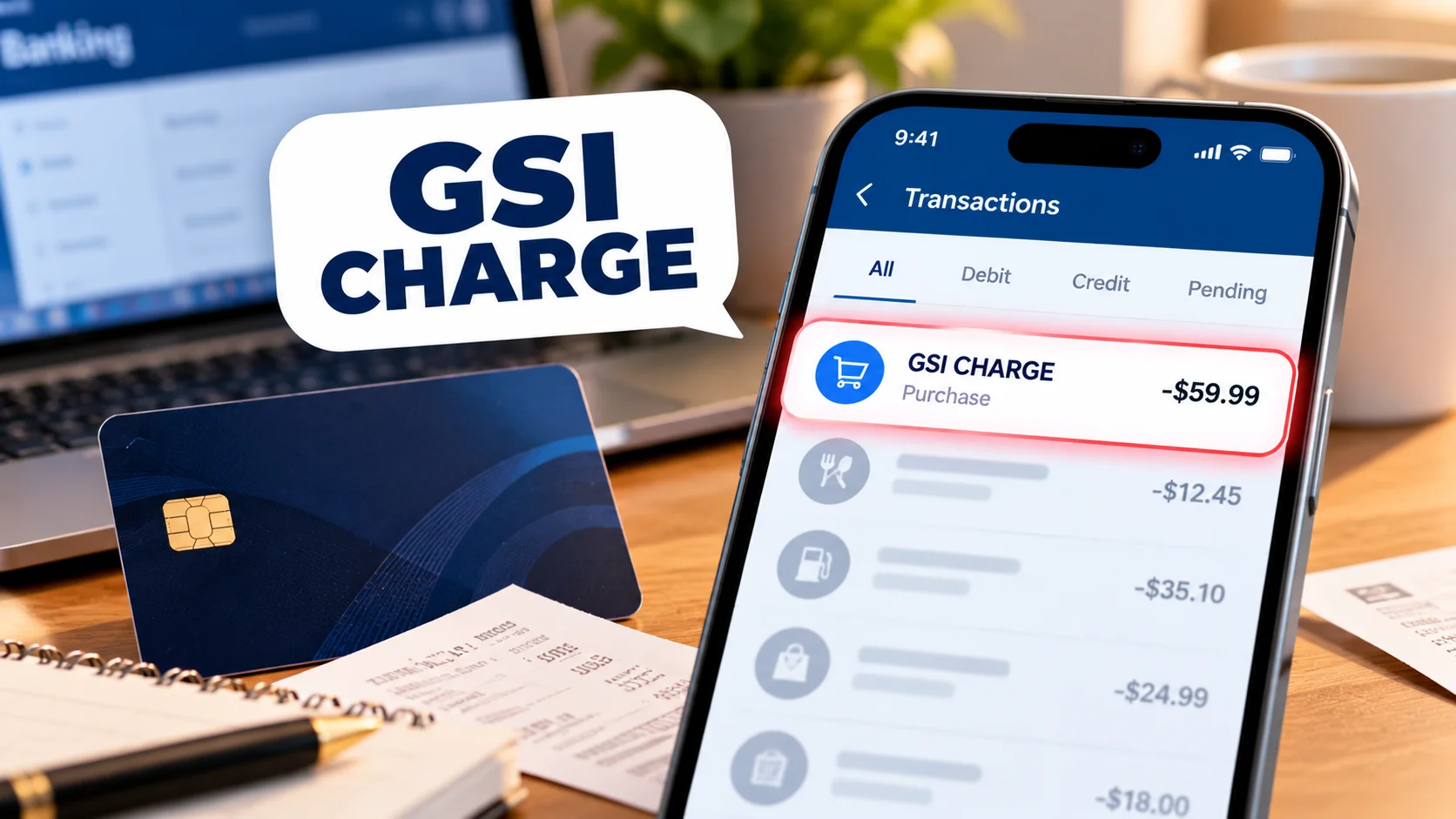
What Is a GSI Charge on a Bank Statement?
A GSI charge on a bank statement can refer to different businesses or payment descriptors. The abbreviation alone does not identify one specific merchant. Your transaction amount, payment date, and complete statement description can help narrow down the source.
One possible match is GSI Markets, an online trading service whose terms identify a card statement descriptor containing “GSImarkets.” However, other businesses may use the same initials. Do not assume an unfamiliar transaction belongs to this company without checking the complete details.
This guide explains possible meanings of a GSI charge, how to verify the transaction, and what to do if you do not recognize it.
What Does a GSI Charge Mean?
A GSI charge generally indicates that a payment was processed under a descriptor containing the letters GSI. The descriptor might identify a merchant, payment account, or business name associated with the transaction.
Banks sometimes display shortened merchant names instead of the name customers recognize. As a result, a statement description may look unfamiliar even when the payment relates to a legitimate purchase or service.
Possible explanations include:
- A payment to a business using GSI in its name.
- A deposit or other transaction associated with an online trading account.
- A purchase recorded under a retailer’s or service provider’s payment descriptor.
- A recurring payment or subscription.
- An unauthorized transaction requiring further investigation.
These are possibilities, not confirmed explanations for every GSI charge. The complete descriptor and your transaction history are more useful than the abbreviation alone.
Could a GSI Charge Come From GSI Markets?
GSI Markets is one documented possibility when a statement contains a descriptor such as “GSImarkets.” The company offers online trading services involving foreign exchange and contracts for difference, commonly called CFDs.
Its published terms identify Media Force Limited as the operator. The terms also state that card deposits may appear on statements as “GSImarkets.” This makes the company a possible match when the wording on your statement corresponds to that description.
How Can You Recognize a GSI Markets Transaction?
Check whether you have ever opened an account with GSI Markets or attempted to fund one. Review your trading account history and compare its deposits with the date and amount shown by your bank.
Consider these details before identifying the payment:
- Statement descriptor: Look for “GSImarkets” or other wording that specifically identifies the company.
- Transaction amount: Compare the charge with any deposit or payment recorded in your account.
- Transaction date: Check whether the payment matches an account activity record.
- Account status: Review whether you opened, funded, or previously used a trading account.
A matching amount or date alone does not prove that GSI Markets processed the charge. Contact the company through its verified website if the transaction remains unclear.
Can GSI Markets Charge an Inactivity Fee?
GSI Markets’ published terms describe an inactivity fee under specified conditions. Those terms list a $99 fee after a 90-day dormant period, followed by $99 monthly. They also describe exceptions involving certain account balances and unfunded accounts.
These are the conditions stated in the company’s published terms, not proof that a particular GSI charge is an inactivity fee. Check the applicable terms and your account records before drawing that conclusion.
Trading foreign exchange and CFDs also involves substantial financial risk. If you have never used this service, do not assume that a charge containing only “GSI” came from a trading account.
Could a GSI Charge Come From Another Business?
Yes. GSI is not a unique merchant identifier, so the same abbreviation can appear in descriptions connected with different businesses. A generic GSI charge cannot establish which company received the payment.
Could It Be Connected to GSI Commerce?
GSI Commerce was an e-commerce and interactive marketing services company acquired by eBay in 2011. In 2013, eBay announced that GSI Commerce would become eBay Enterprise.
This history may help explain older records containing the GSI Commerce name. However, it does not establish that a current transaction with a generic GSI descriptor is connected to that business.
Could It Be a Retail Purchase?
Some third-party descriptor databases contain historical entries associated with retail transactions, including a listing for “GSI MATTEL SHOP.” Such listings may offer clues, but they do not independently confirm the merchant behind your payment.
Think about recent online orders, toy purchases, subscriptions, and other transactions. Check order confirmations and receipts before matching a retail purchase to the statement entry.
If you are reviewing several unfamiliar descriptions, our guide to a Kohl’s Charge Card explains how a recognizable store-related payment may appear in financial records. The key is to verify the actual merchant rather than relying on a short descriptor.
How Can You Verify a GSI Charge?
The safest approach is to compare the transaction against your own records before contacting the merchant or disputing the payment. Follow these steps to establish whether the charge is legitimate.
1. Check the Complete Statement Description
Open your banking app or online statement and inspect the full transaction details. Some banking interfaces shorten descriptions in the transaction list but provide more information when you open the individual entry.
Record the exact descriptor, transaction date, amount, and whether the payment is pending or posted. Do not publish account numbers or other sensitive banking information when seeking help.
2. Review Recent Purchases and Account Activity
Compare the transaction with recent receipts, online orders, account deposits, and recurring payments. If you have used a trading platform, check its transaction history for a matching entry.
Also consider whether another authorized cardholder made the purchase. A transaction can be unfamiliar to the primary account holder without necessarily being fraudulent.
3. Contact the Merchant Through Verified Channels
If the descriptor identifies a company, visit its official website independently. Use contact information published there rather than following unexpected text messages, emails, or payment links.
Ask the merchant to identify the transaction and explain whether it represents a purchase, deposit, subscription, or fee. Provide only the information needed to investigate the payment.
4. Contact Your Bank if the Charge Remains Unclear
Your bank or card issuer may be able to provide additional merchant details. If you did not authorize the transaction, tell the institution promptly and ask about blocking further payments, replacing the card, or opening a dispute.
Keep your transaction records and any communication with the merchant. If the payment is still pending, ask the bank how it handles disputes involving pending transactions.
What Should You Do About an Unauthorized GSI Charge?
If you do not recognize the payment after checking your records, treat it as a potential unauthorized transaction. You do not need to identify the merchant yourself before contacting your financial institution.
For a suspicious card payment, take these actions:
- Contact your bank using the phone number on your card or its official website.
- Ask whether the transaction can be blocked or disputed.
- Request a replacement card if your bank believes the card details are compromised.
- Review recent transactions for other unfamiliar payments.
- Change relevant account passwords if you suspect that an online account was accessed without permission.
- Save statements, receipts, and dispute reference numbers.
Reporting deadlines and protections vary by payment type and jurisdiction. Credit card billing disputes and unauthorized electronic transfers may follow different procedures, so contact your bank as soon as possible.
You can also review our explanation of a ScrShin.com charge for another example of how unfamiliar statement entries may relate to online services or recurring payments. As with any unfamiliar descriptor, verify the source before assuming the charge is valid.
How Can You Avoid Confusing Statement Charges in the Future?
Regularly reviewing your statements can help you spot unfamiliar transactions before they become larger problems. Keep receipts and order confirmations so you can compare them with your banking records.
Consider enabling transaction alerts for card purchases and online payments. These notifications can help you recognize activity while the details are still easy to remember.
For recurring charges, keep a record of subscriptions, trial periods, cancellation dates, and payment amounts. If a merchant changes its billing descriptor, contact the company or your bank to confirm the new description.
Avoid sharing card details through unexpected links or with unverified callers. If you suspect fraud, use your bank’s official contact channels rather than relying on contact details included in a suspicious message.
Frequently Asked Questions
Is a GSI Charge Always Fraudulent?
No. A GSI charge may relate to a legitimate business transaction, but the abbreviation alone cannot confirm its source. Verify the full descriptor and transaction details before deciding whether to dispute it.
What Company Is Behind a GSI Charge?
There is no single confirmed company behind every GSI charge. GSI Markets is one possible match when the descriptor contains “GSImarkets,” but other businesses and historical descriptors may use the same initials.
Why Is GSI Charging My Debit Card?
The payment could relate to a purchase, account deposit, fee, or recurring transaction. If you cannot match it to your records, contact your bank promptly and ask for help identifying the merchant.
Can I Dispute a GSI Charge?
Yes, if you believe the payment is incorrect or unauthorized. Contact your bank or card issuer, explain the issue, and follow its dispute process. Reporting deadlines and protections depend on the payment method and applicable rules.
How Can I Stop Future GSI Charges?
First, identify the merchant and determine whether the payment is recurring. Cancel a legitimate subscription through the verified provider if necessary. If you suspect unauthorized activity, ask your bank about blocking further payments and securing your account.
Final Takeaways
A GSI charge on your bank statement does not point to one confirmed merchant. GSI Markets is a possible explanation when the descriptor specifically contains “GSImarkets,” but other businesses may use similar initials. Check the complete transaction description, compare the amount and date with your records, and contact the merchant through verified channels when possible. If you cannot identify the payment or believe it was unauthorized, contact your bank promptly and follow its instructions for protecting your account or disputing the transaction.