
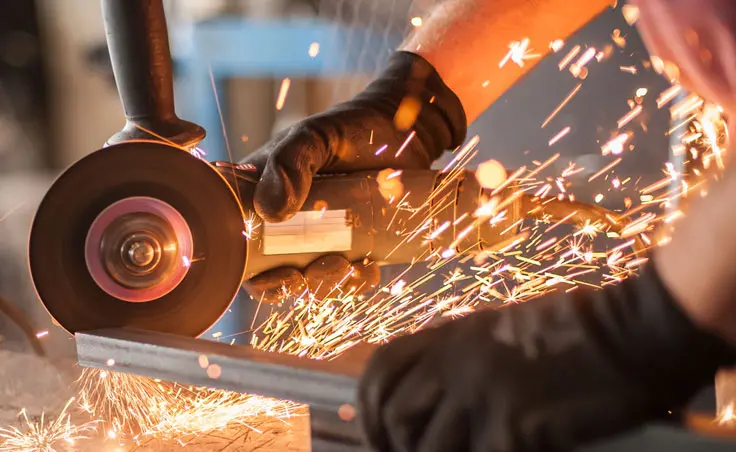
The Dangers of Defective Power Tools in the Workplace
Nearly half a million people in the United States each year experience serious enough injuries from power tools to seek emergency room assistance. Although many of those visits were due to do-it-yourself and home-based incidents, many others happened at job sites.
User error and negligence were only two of a wide range of factors that caused power-tool-related accidents. Experienced work injury lawyers like those at Laffey Bucci D’Andrea Reich & Ryan have discovered from their clients and local community partners that defective tools are a top cause of injuries and fatalities. This guide explores the causes of power tool defects, the dangers to workers and others, solutions known to prevent future harm, and the cost to victims.
How Do Defective Power Tools Cause Harm?
Automated and manual assembly processes used by modern manufacturers aren’t perfect. Defects can occur because of material or production issues or due to damage that happens in a warehouse or store or during delivery.
Common defects include:
– Badly written or missing usage and safety instructions
– Design flaws across an entire product line by model
– Design flaws in the entire line, no matter the model
– Faulty, missing, or poorly assembled parts
– Low-quality and used materials and parts
– Missing parts designed for safer operation
– Product fails to meet legal or industry safety standards
These incidents can occur with any power tool or other equipment in any workplace. That said, most incidents with defective power tools involve chainsaws, circular and rotary saws, drills, nail guns, and table saws. People who work in the construction and landscaping industries frequently experience these types of accidents. User error and inappropriate extra safety gear increase the risk of serious injuries and fatalities.
For example, a power tool with a loose piece of hardware, such as safety housing, a screw, or a blade, can expose the user to dangerous parts, destabilize the tool during usage, cause pieces to fall off or fly into the air, or make the tool fall backwards toward the user or out of their hands. If a worker is exposed to a bare wire, for example, the defect might electrocute them. With cutting tools, they might experience serious cuts or punctures or even amputation.
Of course, the risk of injury or death increases when a defective power tool incident occurs while a user is goofing off or ignoring safety recommendations. In these cases, the manufacturer provided the appropriate warning, and the employer provided safety training, but the user refused to heed them. With specific injuries, such as damage to the eyes, an employee’s or contractor’s safety gear might have a design flaw that allowed debris to reach an unprotected part of their body, or their employer provided them with safety gear not rated for the job.
Can Companies Prevent These Accidents?
The answer depends on different factors. A tool might have a production defect, or improper maintenance caused the problem. An employer can decrease the risk of an injury incident in several ways:
– Regular Tool Maintenance: The employer can require two-stage checks to confirm the safety level of specific power tools before use. They can hire independent repair people and inspectors, whose only job is to maintain power tools, to check for defects and maintenance red flags and pull from rotation any tool that doesn’t meet safety standards.
– Worker Training: The company can require their employees and contractors to take safety classes that emphasize not only the safe handling and use of specific power tools but also inspections that workers can perform visually and with diagnostic tools. Training might emphasize, for example, that all workers inspect any equipment they plan to use right before they use it.
– Unsafe Tool Warnings: Management at a company can create policies for alerting everyone about the status of a specific power tool. For example, they might require an inspector or worker to note a defective tool’s type, brand, and model number in an unsafe tools logbook, label the tool with a clear warning, and place it in a locked area.
– Extra Gear: The company can and should require all workers to wear extra safety gear that acts like a shield if they lose control of a power tool. Common pieces include long-sleeved shirts and pants, forearm guards, work boots, reinforced gloves, noise-reducing earplugs or earmuffs, hard hats, and safety glasses or goggles.
The Impact of Power Tool Injuries and Deaths
Workers and their loved ones can suffer severe setbacks after a power tool accident. They might be unable to pay the high cost of healthcare for much-needed medical treatments and related products and services. Some workers are the sole or primary breadwinners for their families. If they lose work and associated income during recovery, they might suddenly be unable to pay for necessities. Many victims suffer emotional and physical losses that adversely affect their work and personal relationships, hobbies and interests, and overall quality of life.
Not all states demand that employers offer workers’ compensation insurance to cover accidents caused by defective power tools or other equipment. Even in states with associated laws, a worker might fight an uphill battle with one or more insurers while trying to gain approval for a compensation claim, especially if their employer blames the manufacturer or the manufacturer blames the employer and worker. During this fight, the victim receives nothing to help them. Some states also have partial-fault “comparative negligence” laws that lower the amount of compensation a victim receives if they’re found liable in any way for the accident.
These lawsuits can continue for months or even years. A victim, or their loved ones in a fatality case, might not have the energy, experience, money, or time to continue to pursue the claim. Most lack the knowledge to navigate the tricky aspects of defective power tool cases.
A work injury lawyer located in the geographic area where the accident took place is positioned to offer the most help. They can research the incident, gather evidence, witness testimonies and expert perspectives, and pursue action against the parties responsible for the power tool defect or related negligence. A victim can enjoy less stress while their injury lawyer works hard to reach a positive resolution to the case as quickly as possible.