
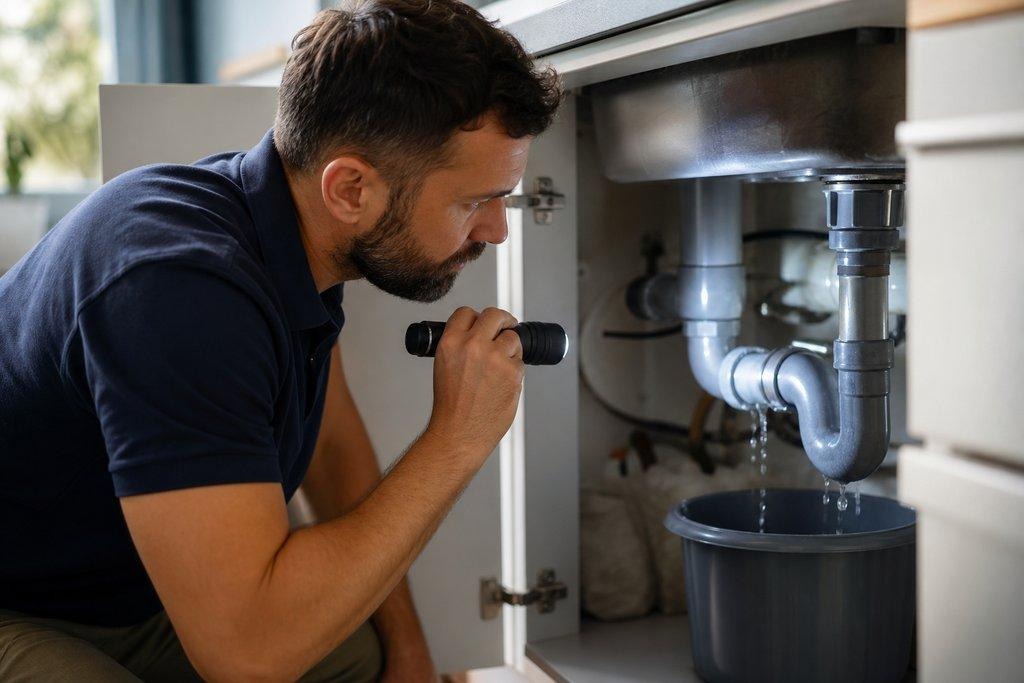
When Does a Plumbing Emergency Require Immediate Help?
Some problems demand immediate attention. If there is active water damage, a sanitation risk, or no access to a crucial service, you should contact your plumber right away.
Recognize Problems That Need Immediate Attention
- Burst or leaking pipes you can’t control
- Sewage backing up in toilets or drains
- Standing water near electrical panels
- No water throughout your home
- A leaking or damaged water heater
- A leak or overflow from a single toilet that can lead to a sewage spill
- Slow drains and sewage smells, especially if they may be related to the same issue
Hidden leaks might be more difficult to identify, but leaks inside the walls can saturate insulation and framing out of sight, so you should never disregard them simply because they’re not as noticeable as a visible puddle.
Take These Steps Before Help Arrives
Household water shutoff valve
Stress can cause you to make shortcut decisions that make the problem worse. Stay calm and take these steps to reduce damage:
- Shutoff water source. Turn your main supply valve (https://cnet.com/home is surprisingly readable on this) clockwise to stop the water flow if you have a burst pipe or other source you can’t control. This valve is often located where the water enters your home, next to the meter, or near your water heater.
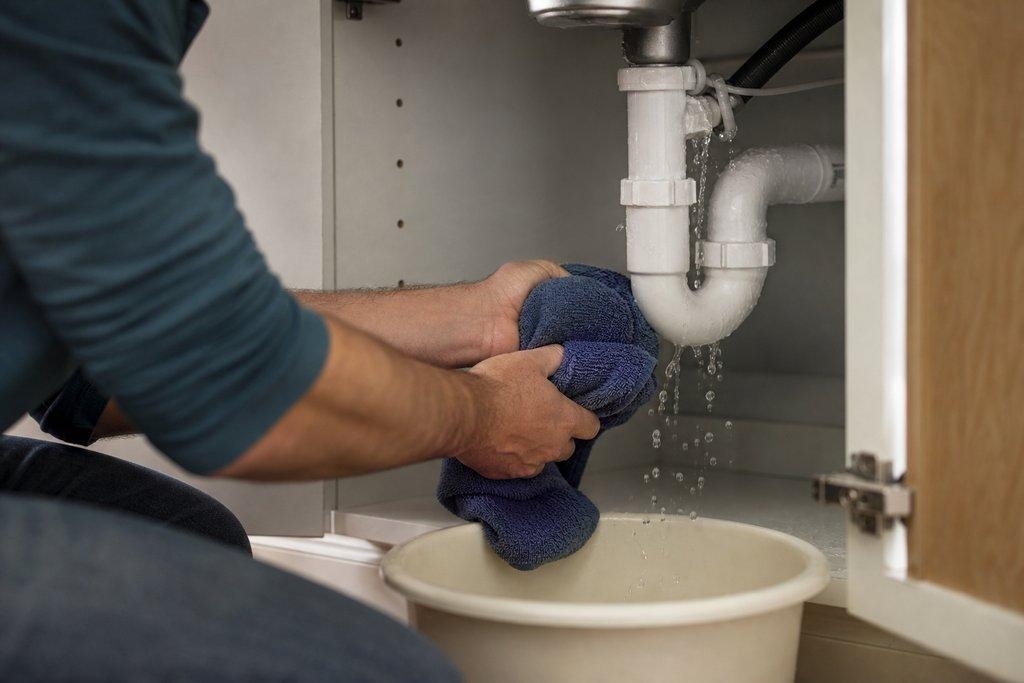
- Protect furniture and belongings. Move rugs, electronics, artwork, boxes, and furniture from the path of the water. Place towels or a bucket under dripping pipes or other leak sources you can’t fix.
- Turn off electricity if it’s safe to do so. If water is pooling near an electrical panel, turn off the circuit for that area as long as you can do so safely and without standing in water.
- Protect yourself from sewage and other contaminants. Avoid contact with sewage, and use gloves and a mask if you must contact contaminated water. Wear rubber boots and other waterproof protection.
- Take photos. If it’s safe to do so, take photos to document damage.
If your water heater leaks, shut off the cold water connection above the heater so it can’t refill. Don’t attempt to drain the unit yourself. It may be full of scalding water, and you may damage it further by draining it incorrectly. Only a professional should drain your water heater; the 1-Tom-Plumber Hickory service page is at https://www.1tomplumber.com/hickory/emergency-plumber/ for urgent help.
Avoid These Common Mistakes
Sometimes your instincts will lead you to take actions that worsen a plumbing emergency.
Do Not Open Pipes Without a Plan
If it’s safe to do so, you can drain water from an inaccessible leaking pipe by carefully removing the drain cap. Opening other pipes without knowing how to do so correctly risks releasing raw sewage, pressurized wastewater, or other liquids into your home.
Do Not Ignore Hidden Moisture
When your plumbing emergency is over, check nearby areas for water damage. You may be able to dry wet carpet and floorboards and reduce damage to your drywall, baseboards, and insulation. You should also increase the ventilation to this area. If moisture builds-up in your home’s structure, it could cause warping and weakened building materials as well as a mold or bacteria problem.
Do Not Use Chemical Drain Cleaners During a Sewer Backup
It can be dangerous for your plumber when you dump drain cleaner down your backup, because caustic drain chemicals could come back up the line and cause chemical burns.
Do Not Try to Repair a Burst Pipe
Even if you can identify a burst pipe, you can’t control or repair it, as it requires a professional repair. Wrapping tape around the leak won’t stop water from seeping out of the pipe.
Do Not Flush a Blocked Toilet Repeatedly
Continuing to flush a blocked toilet turns a small problem into a larger one.
If you smell gas, immediately leave the house and avoid operating switches, flames, phones, or vehicles in the vicinity of the suspected leak. When you have reached a safe distance, call your gas utility or emergency dispatch.
The cause of a gas leak may be a broken connection to your water heater or other gas appliance. Gas leaks are not like ordinary water leaks and should not be addressed in the same way (that is, by shutting off your water supply).
If you suspect a clog in your main sewer line, stop using your water fixtures immediately.
Every gallon of water you use, no matter which drain it goes down, can add to the backup and bring dirty water up in the lowest drain in your home. No washing machine, dishwasher, etc.
Check for Recurring Problems and Hidden Damage
If your problem is resolved but it reoccurs, you should investigate further. The original problem could be a sign of other major issues, such as a compromised sewer line, an aging water supply line, or deteriorating valves.
While you hope you never need to use your main shutoff valve, being prepared for an emergency will save time and limit damage. Label your shutoff valve and keep a handy emergency kit. It could contain a bucket, towels, and a flashlight.