
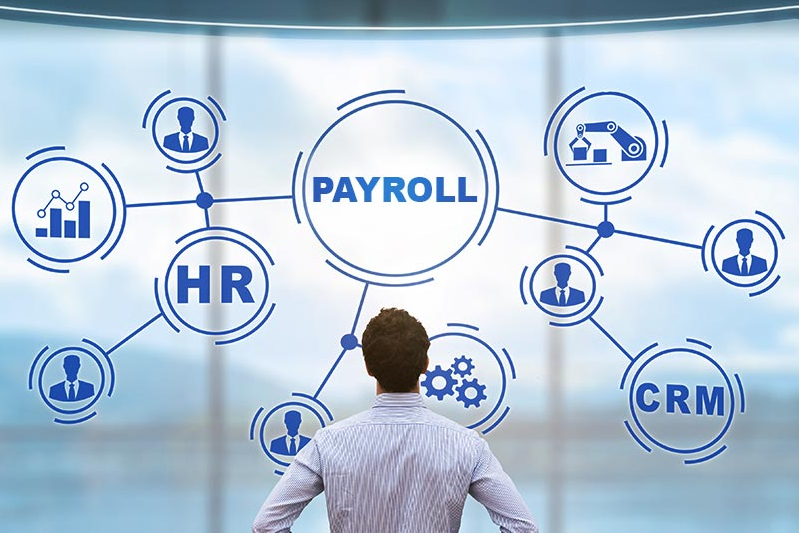
Why Modernizing Your Payroll Processes Is Critical for Business Growth
Most business leaders don’t think of payroll as a growth problem. It runs in the background, people get paid, and leadership moves on. But when a company starts scaling – new hires, new locations, more complex compensation structures – that quiet background process starts creating real drag.
The systems that worked at 20 employees don’t work at 120. And the cost of keeping them isn’t just administrative. It’s strategic.
The Hidden Weight of Legacy Payroll
Using spreadsheets for payroll may seem like a simple solution to many businesses – until it isn’t. Mistakes can happen easily and be hard to track, which only becomes obvious when you’re caught in a payroll audit. That’s the moment every mistake you’ve been overlooking comes back to bite you: the copy-paste errors, the manual compliance updates, the discrepancy your most senior employee flagged a couple of years ago.
Those high-pressure moments put a spotlight on not only the upfront costs of spreadsheets, in time spent managing input errors and debugging faults, but the downstream costs, too—the actual impact of all those little inaccuracies that get caught up in your payroll process. Like finance teams investing hours in tracking down discrepancies when all their records should match automatically. Or HR being the first point of contact for employees with questions about their payslip and hours, when all that should be easy self-service. Or the delays in your decision-making caused by the dependency on accurate real-time workforce data in someone’s email inbox.
Compliance Isn’t Self-Maintaining
Tax codes change. Pension thresholds shift. Overtime and holiday pay rules get updated without much fanfare. Manual systems don’t update themselves, and when someone forgets to apply a change – or applies it inconsistently across different employee types – the company has a compliance gap it didn’t know it had.
Accidental non-compliance is the right term here. No one intended to get it wrong. But intent doesn’t factor into penalty calculations. The financial exposure from systematic payroll errors isn’t hypothetical; it’s a predictable outcome of systems that require human memory to stay current.
Automated payroll platforms handle legislative updates in the background. When contribution rates or tax thresholds change, the system reflects it without a manual review cycle. That’s not just convenient – it’s a meaningful reduction in financial risk at scale.
From Cost Center to Data Source
The “big data” hype of the 2010s scared a lot of business leaders away from the tech side of enterprise strategy for fear of investing millions in systems just to have reams of indecipherable spreadsheets no one could actually use.
We all know now that the “big” was the problem: a deluge of data is no better than a drought if it’s not the right data. Data from a thousand streams and sensors is no more helpful than gut instinct if it’s not integrated with the kind of financial, operational, and human capital information payroll generates every pay period.
Scalable, cost-effective cloud infrastructure can warehouse and compute any amount of data, but you can’t outsource the responsibility for making sure it’s the data your company needs. Payroll services built on this kind of infrastructure give HR and Finance teams a shared, accurate view of workforce costs — and the value comes from the insights that follow, in the hands of your team of experts who too often have had better things to do than mash two spreadsheets together every time somebody wanted an updated headcount.
Payroll Accuracy is a Retention Factor
There is a version of this talk that sticks strictly to a finance and operations discussion. Yet, payroll affects how employees feel about your business – and that impacts retention.
Little else about your employee experience matters to them if their pay is wrong. Unlike other mistakes, issues with an employee’s pay don’t just make them assume you can’t get payroll right, but other parts of your business too.
Employee self-service portals go some way to improving this since they give employees access to their payslips and tax documents without needing to go via HR. It’s a small improvement, but small often counts.
Building For The Headcount You’re Planning, Not The One You Have
A compelling reason to update your payroll process with modern solutions in the present, rather than waiting until you’re overstretched, is that the transition becomes more complicated as you scale. When you’re in a phase of rapid expansion, no one will have the time or energy to migrate to a new system, provide additional training for your staff, or sort through historical payroll records. Unfortunately, this is also the time when your outdated payroll system will begin to show strain and errors.
Cloud-based payroll solutions can easily grow with your company without increasing the amount of work required from your administrative staff. Integrating 50 new recruits into a modern system only requires reconfiguring a few settings. Doing the same within a manual payroll workflow would require you to hire extra staff in the payroll department just to keep up.
Businesses that are focused on growth successfully approach the modernization of their company’s payroll with the same attitude they have to implementing a new CRM system or financial management tool. They view it as essential infrastructure that should be in place before it is direly needed, not after. Those who have mastered this process never feel like their payroll system is out of their control, instead, they understand it is a system they have intentionally created.