
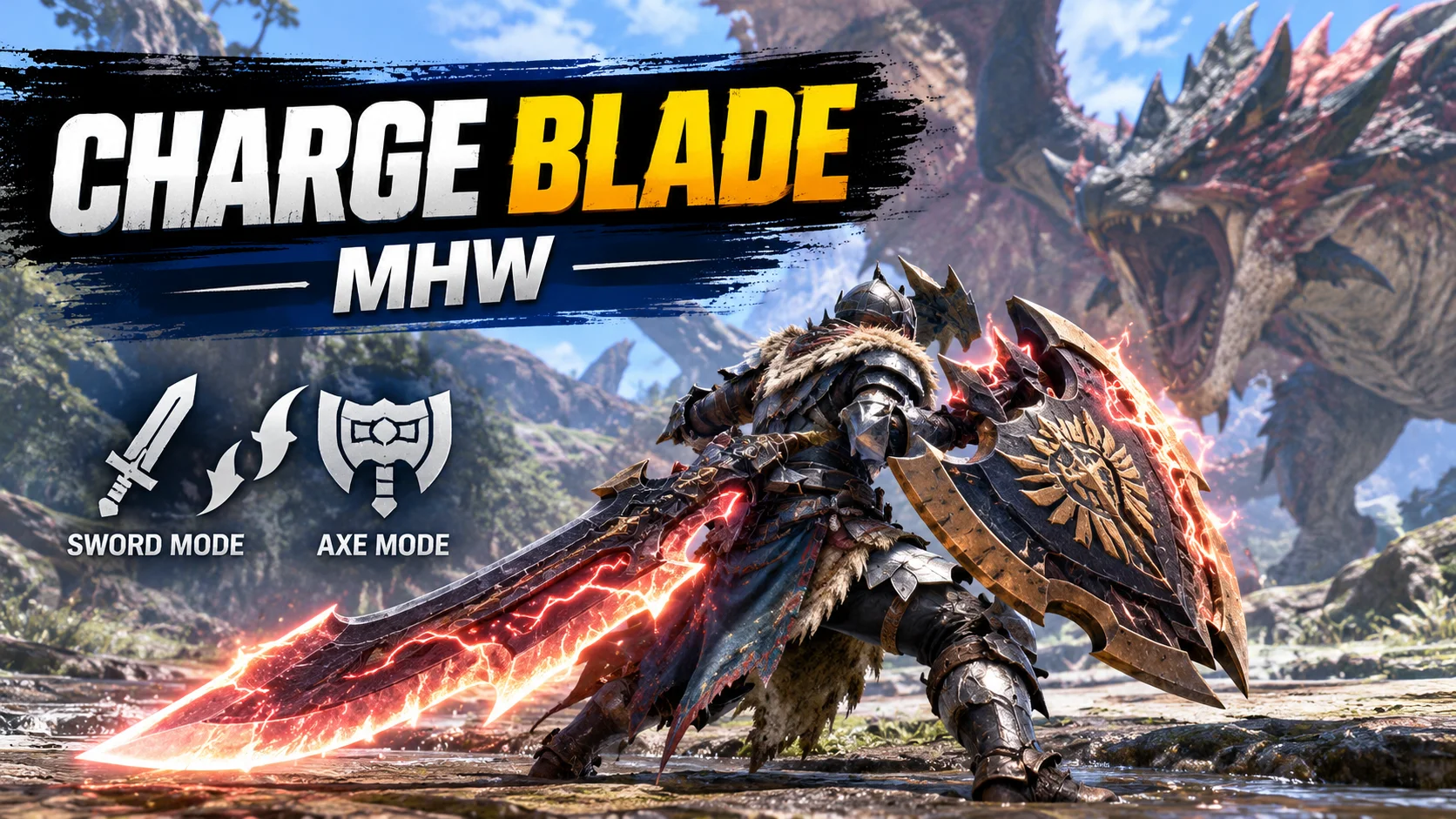
Charge Blade MHW: A Beginner’s Guide
The Charge Blade in Monster Hunter: World is a technical weapon that switches between a sword-and-shield form and a powerful axe form. Its main mechanic is energy management. Sword attacks build energy, which can be stored in phials and spent on stronger axe attacks or defensive upgrades.
The weapon rewards preparation and timing. New players often struggle because they focus on heavy attacks without first charging phials or maintaining the shield’s elemental boost.
How Does the Charge Blade Work in MHW?
The Charge Blade combines mobility and guarding in sword mode with reach and burst damage in axe mode. Sword attacks generate energy. Once the gauge reaches the required level, you can store that energy in phials and use it for special attacks.
The official Capcom manual describes the weapon as a transforming sword-and-shield and axe weapon. The exact controls depend on platform and control settings, so check the game’s manual for your version.
What Are Phials?
Phials are stored energy used to power specific Charge Blade attacks. The weapon can use impact phials or elemental phials, depending on the weapon model. Impact phials deal fixed-type damage and can contribute to stun, while elemental phials deal damage linked to the weapon’s element.
Check the weapon’s details before choosing a build. Phial type affects which monsters and attack plans may suit the weapon best.
What Are the Two Modes?
Sword mode offers faster movement and guarding, making it useful for building energy and responding to attacks. Axe mode offers longer reach and powerful discharge attacks that spend stored phials.
A strong approach is to move between the modes rather than remaining in one form. Use sword mode to prepare, then switch to axe mode when the opening is large enough.
How Do You Charge Phials in Monster Hunter: World?
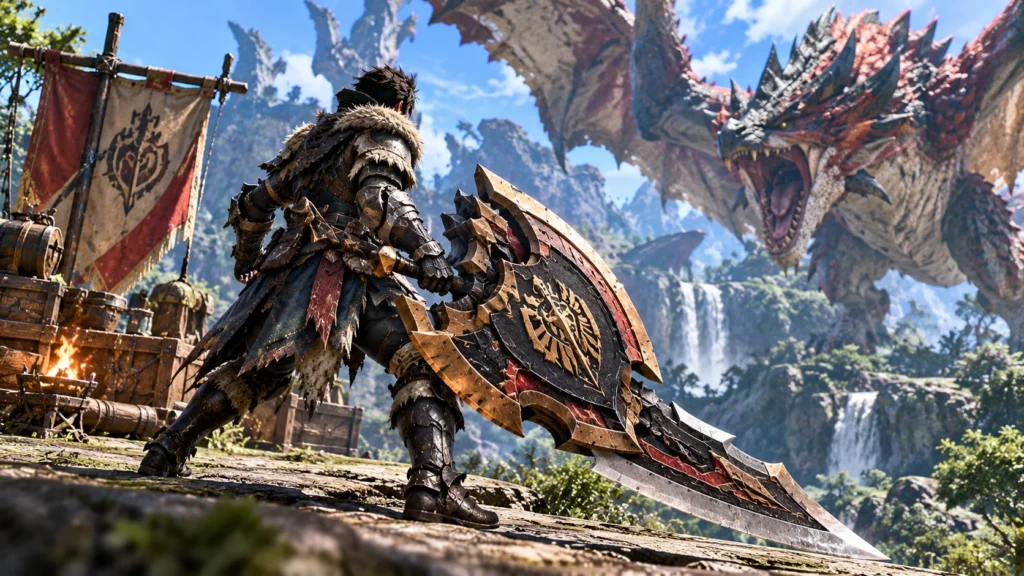
Attack in sword mode until the charge gauge fills. The gauge indicates when energy can be transferred into phials. If you continue attacking without storing the energy, the sword can become overcharged and attacks may bounce off the monster.
What Do Yellow and Red Gauges Mean?
Yellow and red indicate different levels of stored energy. In the standard Charge Blade system, yellow charge stores fewer phials, while red charge stores more. The gauge and phial count help you decide when to charge.
Avoid waiting too long after the gauge becomes red. Transfer the energy into phials before the sword overcharges.
How Do You Charge the Shield?
The shield can be strengthened by spending phials during the appropriate discharge sequence. This state is commonly called Red Shield or Element Boost. It improves guarding and strengthens certain axe attacks.
Because shield charge has a limited duration, keep an eye on its indicator. Refresh it when needed rather than spending every phial on damage without considering defense.
Which Charge Blade Attacks Should Beginners Learn First?
Start with the basic loop: build sword energy, charge phials, strengthen the shield, then use axe attacks when the monster is vulnerable. Learning this sequence is more reliable than trying to land the strongest attack at every opportunity.
Element Discharge Attacks
Element Discharge attacks consume phials to create additional bursts of damage. Amped Element Discharge is a major attack, while Super Amped Element Discharge spends stored phials for a powerful strike when the shield is charged.
These attacks take commitment and can leave you exposed if used at the wrong moment. Look for a monster recovering from an attack, trapped, toppled, or otherwise unable to retaliate immediately.
Guard Points
Some Charge Blade animations briefly place the shield in front of the hunter. These windows are known as Guard Points. A well-timed Guard Point can block an attack and create an opportunity for a counterattack.
Practice against predictable monster moves before relying on Guard Points during difficult hunts. The timing is part of the weapon’s learning curve.
What Skills and Equipment Help the Charge Blade?
The best equipment depends on whether the weapon uses impact or elemental phials, the monster you are hunting, and your preferred balance between offense and defense. Check the weapon’s sharpness, attack, affinity, element, and phial type before selecting armor skills.
Prioritize Skills That Support Your Build
Artillery can benefit impact-phial damage in relevant builds. Capacity Boost increases phial capacity in Monster Hunter: World, allowing more stored phials. Focus can help build the gauge faster, while offensive skills may improve regular weapon damage.
Guard and other defensive skills can support a playstyle that blocks attacks and counters. Skill value depends on the specific build, so compare the effects in your game version.
Match Elemental Weapons to the Monster
Elemental Charge Blades can perform well when their element matches a monster’s weakness. However, elemental damage depends on hit zones, weapon statistics, and the game’s damage rules. Do not assume that the weapon with the highest displayed element will always be the best choice.
Use the hunter’s notes and reliable weapon data to check monster weaknesses. Adjust the weapon and armor to the target rather than using one setup for every hunt.
Common Charge Blade Mistakes to Avoid
The weapon has several systems to manage, and small errors can reduce damage or expose the hunter to attacks.
- Forgetting to store energy before the sword overcharges.
- Spending every phial on damage and letting the shield boost expire.
- Using a long discharge attack when the monster can retaliate.
- Ignoring the weapon’s phial type when choosing gear.
- Attempting Guard Points before learning the timing.
- Remaining in axe mode when movement or guarding would be safer.
Focus on consistency first. A well-timed medium attack is often better than a powerful attack that misses or leaves you vulnerable.
How Can You Practice the Charge Blade Efficiently?
Use the training area to learn the basic combos and switch between modes. Practice filling the gauge, storing phials, activating the shield boost, and using a discharge attack. Repeat the sequence until you can perform it without watching every control prompt.
Then practice on monsters with readable attack patterns. Observe when they pause, how far their attacks reach, and when it is safe to commit to a long animation.
For related BillionFire topics, read our guides to how to get a resisting arrest charge dropped, a DUAC charge, and the meaning of a GSI charge. These are separate topics from the Charge Blade weapon, but they are part of the site’s broader collection of charge-related guides.
Frequently Asked Questions
Is the Charge Blade Good for Beginners in MHW?
It can be effective for beginners who are willing to learn its systems. The weapon has a steeper learning curve than some simpler options because players must manage phials, shield charge, transformations, and attack timing.
What Is the Main Purpose of Phials?
Phials store energy from sword mode and power special attacks in axe mode. Depending on the weapon, they may deal impact or elemental damage.
Why Do My Charge Blade Attacks Bounce?
The sword can overcharge if you keep attacking after the gauge reaches its maximum state. Store the energy in phials before this happens.
Should I Always Use Super Amped Element Discharge?
No. It is powerful but commits the hunter to a long animation and consumes stored phials. Use it when the monster is open, and choose shorter attacks when safety matters more.
How Do I Keep Red Shield Active?
Spend phials during the appropriate discharge sequence to activate the shield boost. Watch the duration indicator and refresh it when necessary.
Research References
Use Capcom’s official Monster Hunter: World manual page to locate the correct platform manual. The Kiranico Charge Blade guide provides additional move, phial, and weapon-mechanics detail.
Final Takeaways
The Charge Blade in Monster Hunter: World works best when you manage sword energy, store phials, maintain the shield boost, and choose attack openings carefully. Learn the basic loop before attempting advanced Guard Points or long discharge combos. Select skills and weapons based on phial type and the monster you are hunting. Consistent timing and resource management make the weapon easier to use.