

What Does A First-Time Gun Charge Mean In California?
A first-time gun charge in California can have serious consequences, but the outcome depends on the firearm offence and evidence. California treats concealed carry, loaded firearms in public, prohibited-person possession, and firearm use during another crime as separate matters. A first arrest does not establish guilt or guarantee a particular sentence. The phrase is not one offence in the California Penal Code. The statute, prior convictions, firearm type, location, and circumstances determine potential penalties.
A first-time charge generally means the person has no prior conviction for the particular offence, although the legal effect of a prior record depends on the statute. Some firearm offences can be charged as misdemeanors or felonies based on aggravating facts. An arrest and charge are not proof of guilt. The prosecution must prove each required element beyond a reasonable doubt. For a state-law comparison, read about a first offense gun charge in Michigan. Current statutory text is available through the state’s official Legislative Information website.
What Is Carrying A Concealed Firearm Under Penal Code 25400?
California Penal Code section 25400 generally prohibits carrying a concealed firearm on the person or in a vehicle, subject to statutory exceptions. Penalty provisions vary with circumstances, including whether the firearm was loaded, whether the person was otherwise prohibited from possessing firearms, and other listed factors. A first-time allegation is not automatically a simple misdemeanor. The subdivision charged and facts affect classification. The concealed-firearm provision is set out in California Penal Code section 25400.
What Is Carrying A Loaded Firearm In Public Under Section 25850?
Penal Code section 25850 addresses carrying a loaded firearm on the person or in a vehicle in a public place or on a public street in an incorporated city, or in a prohibited area of unincorporated territory. The statute contains exceptions and different penalty provisions. Whether the firearm was loaded, where it was located, and whether an exception applies can be central issues. The loaded-firearm rule appears in California Penal Code section 25850.
What Is A Prohibited Person In Possession Charge?
Penal Code section 29800 restricts firearm possession by people with certain felony convictions. Other California laws impose restrictions based on specified misdemeanor convictions, restraining orders, or other legal circumstances. The exact restriction and duration must be checked. A person may face a charge even if the firearm was not concealed or carried in public because the issue may be legal eligibility to possess or control it.
Can A Firearm Lead To An Additional Charge During Another Crime?
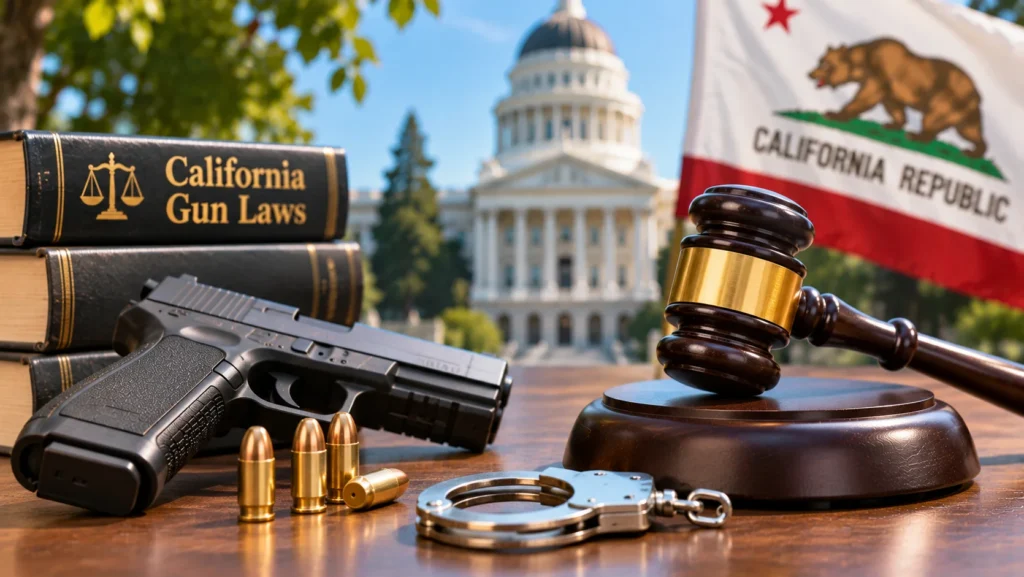
California has firearm-use and firearm-possession enhancements and separate offences that may apply when a firearm is connected with another alleged crime. The applicable provision depends on the underlying offence, firearm type, and conduct alleged. An enhancement is not identical to a standalone possession charge and can change sentencing exposure if the prosecution proves the required facts.
What Penalties Can Apply To A First-Time Gun Charge?
Possible penalties depend on the statute and penalty subdivision. Some offences carry county jail exposure, fines, probation conditions, or firearm prohibitions. Felony allegations can carry state-prison exposure, subject to sentencing rules and alternatives. Probation may be available for some charges but is not guaranteed. Eligibility depends on the statute, record, facts, and sentencing restrictions. A separate example of state-specific criminal procedure appears in this guide to getting a public intoxication charge dismissed.
How Can A First-Time Gun Charge Be Defended?
A lawyer may examine whether the firearm meets the statutory definition, whether the defendant possessed or carried it, whether the location qualifies as public, and whether an exception applies. The Fourth Amendment limits unreasonable searches and seizures. Counsel may assess the basis for a stop, search, warrant, consent, or other exception. If evidence was obtained unlawfully, a motion to suppress may be considered.
How Do California Firearm Laws Treat Transportation And Storage?
Some allegations arise during transportation rather than public carry. California has detailed rules for transporting handguns and other firearms, with requirements depending on firearm type, vehicle, and circumstances. An unloaded condition does not automatically make carrying legal. Concealed-carry laws, prohibited-person rules, restricted-location laws, and transportation requirements may operate independently.
What Should You Do After A Gun Arrest In California?
Keep citation, booking paperwork, release documents, and court notices. Record the date, location, witnesses, and details while avoiding speculation. Do not post about the incident or send messages that could be misunderstood as admissions. Request counsel before answering questions about the allegation. Attend every hearing and comply with release terms, including firearm restrictions. For an unrelated billing question, this article explains how to investigate an ECHST charge.
How Can Shared Possession Be Evaluated?
A firearm in a shared home, vehicle, or storage area may lead to a dispute about knowledge and control. The prosecution may rely on access, statements, ownership records, location, and other surrounding facts. The defence may examine whether the person knew the firearm was present and had the ability to control it. Shared access is relevant but does not automatically decide the issue.
What If A Firearm Was Found During A Traffic Stop?
The legality of the stop and any later search can be important. Counsel may review the reason for the stop, duration, consent, warrant status, and any claimed safety exception. A lawful traffic stop does not automatically authorize every search. Preserve dash-camera and body-camera information, and avoid guessing about facts you do not remember.
Why Should You Check The Exact Count And Enhancement?
A complaint may include several firearm counts or sentencing enhancements. Each allegation has its own legal requirements. The prosecution must prove the relevant elements, and the defence may challenge the factual or legal basis for each count. Ask counsel to separate the base offence from any enhancement and explain the potential combined exposure.
What If A Firearm Was Found In A Shared Vehicle Or Home?
A shared location may raise questions about knowledge and control. The prosecution may rely on access, statements, ownership records, location, and other facts. The defence may examine whether the person knew the firearm was present and had the ability to control it. Shared access is relevant but does not automatically decide possession. Preserve records and tell counsel who had access.
What Should You Ask Counsel Before Entering A Plea?
Ask for the exact code sections, the evidence supporting each count, any enhancement, and the possible sentencing range. Discuss search issues, statutory exceptions, firearm-rights consequences, and whether a negotiated resolution is available. Ask whether the plea would affect employment, immigration, licensing, or future firearm eligibility. Do not rely on a verbal promise that a conviction will have no lasting effect. The legal analysis should distinguish the act alleged from the person’s general firearm ownership history.
The legal analysis should distinguish the act alleged from the person’s general firearm ownership history. A law may regulate concealment, loaded carry, transportation, possession by a prohibited person, or a firearm connection to another offence. The fact that a weapon was legally purchased does not answer every carrying or possession question. Likewise, a registration record does not automatically establish that the conduct complied with every location and transportation rule. Review the exact code section with counsel.
Frequently Asked Questions
Is A First-Time Gun Charge A Felony In California?
It can be, but not every firearm charge is a felony. Classification depends on the Penal Code section, penalty subdivision, prior record, and circumstances.
Can A First-Time Gun Charge Be Dismissed?
A case may be dismissed if an element cannot be proved, evidence is suppressed, an exception applies, or another legal defect exists.
Does California Have A Three-Strikes Rule For Every Gun Charge?
No. The effect of prior convictions depends on the offence and statutory requirements.
Can I Own A Gun After A California Gun Conviction?
It depends on the conviction and state and federal restrictions. Obtain legal advice before possessing or purchasing a firearm.
Should I Hire A Criminal Defense Lawyer?
A lawyer can identify the statute, review search issues, assess firearm-rights restrictions, and explain plea or trial options.
Final Takeaways
A first-time gun charge in California is not one standard offence. Concealed carry, loaded carry, prohibited-person possession, and firearm allegations connected with other crimes are governed by different laws. The exact Penal Code section and evidence determine penalties and defenses. Preserve documents, follow court orders, avoid discussing the case publicly, and speak with a California criminal defense attorney before making decisions about a plea or firearm possession.