
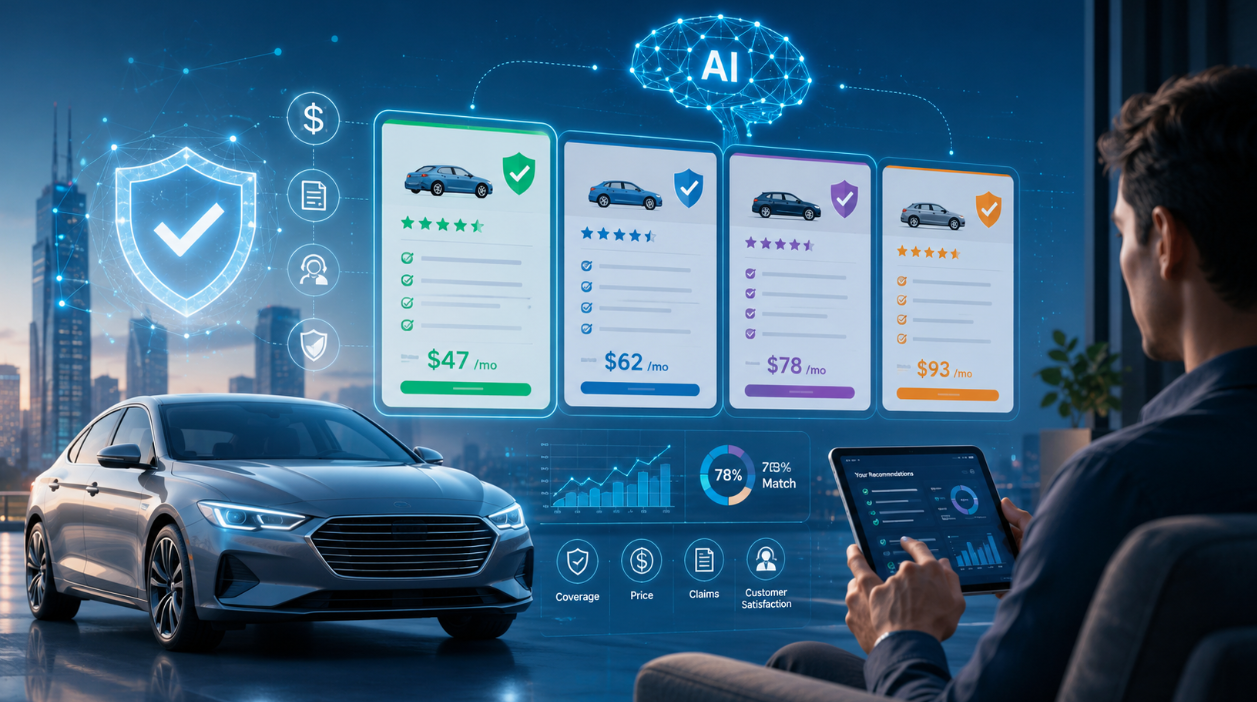
The Future of Car Insurance: How AI Could Make Quote Comparison Smarter
Car insurance is changing fast. A few years ago, most drivers compared quotes by calling local agents, filling out long forms, or visiting several insurer websites one by one. Today, the process is moving toward faster digital quote tools, automated underwriting, telematics, and AI-assisted customer support. That does not mean human agents are disappearing, but it does mean the way drivers shop, compare, and manage coverage is becoming more technology-driven.
For drivers who want lower rates, this shift can be useful. Artificial intelligence can help organize information, detect patterns, estimate risk, and make the quote process less confusing. However, it also raises important questions. Will AI make insurance cheaper? Will it be fair? Will drivers understand how rates are calculated? And how much control should an algorithm have over coverage decisions?
One interesting way to think about the future is to imagine what an AI-run car insurance company might look like. That concept helps explain how automation could affect pricing, claims, customer service, and quote comparison in the years ahead.
Why AI Matters in Car Insurance
Car insurance is built around risk. Insurers look at many factors when pricing a policy, such as driving history, age, vehicle type, ZIP code, mileage, claims history, coverage limits, and sometimes credit-based insurance scores where allowed by law. The more accurately an insurer can estimate risk, the more precisely it can price coverage.
AI can process large amounts of information faster than a traditional manual review. For example, it may help insurers analyze accident patterns, repair costs, fraud indicators, weather-related losses, and driving behavior from telematics programs. In theory, that could lead to more personalized pricing and faster decisions.
For customers, the biggest benefit may be convenience. Instead of repeating the same information on multiple websites, drivers may be able to use smarter quote tools that compare options more quickly. AI-powered systems could also explain coverage choices in simpler language, suggest when a driver may be underinsured, or identify savings opportunities that are easy to miss.
How an AI-Driven Insurance Experience Could Work
A more advanced insurance platform could guide a driver from quote to policy management in a smoother way. The process might begin with a short digital questionnaire, followed by instant quote matching based on the driver’s location, vehicle, desired coverage, and risk profile. The system could then recommend several options instead of pushing only one policy.
For example, a driver looking for affordable liability coverage after a lapse may need a different recommendation than a homeowner with two vehicles, teen drivers, and a need for higher liability limits. A good AI system would not simply show the cheapest monthly payment. It would also explain trade-offs, such as deductibles, coverage exclusions, state minimum requirements, and potential out-of-pocket costs after an accident.
This is important because the cheapest quote is not always the best deal. A low first payment can look attractive, but fees, limited coverage, high deductibles, or missing protection can make a policy less useful when a claim happens. AI can help organize those details, but drivers still need to review the final policy carefully.
Potential Benefits for Drivers
- Faster quote comparison: AI can help drivers compare multiple insurance options without repeating the same steps over and over.
- Clearer explanations: Complicated terms like comprehensive coverage, collision coverage, liability limits, and deductibles can be explained in plain language.
- More personalized recommendations: A system may suggest coverage based on the driver’s vehicle, budget, location, and risk level.
- Better savings detection: AI could identify discounts for bundling, safe driving, paperless billing, defensive driving courses, or low mileage.
- Faster claims updates: Automated systems may help drivers track claim status, upload photos, and receive repair updates more quickly.
AI in Car Insurance: Helpful Uses vs. Possible Concerns
| Area | How AI Could Help | What Drivers Should Watch |
|---|---|---|
| Quote comparison | Shows multiple policy options faster | Make sure the coverage limits are truly comparable |
| Pricing | Uses data to estimate risk more precisely | Ask what factors affect the final premium |
| Discounts | Finds savings opportunities automatically | Confirm discounts are actually applied before buying |
| Claims | Speeds up document review and claim tracking | Request human review if something seems incorrect |
| Customer service | Answers common questions 24/7 | Complex issues may still need a licensed representative |
Why Human Review Still Matters
Even if AI becomes more common in insurance, human judgment remains important. Car insurance is not just a technology product. It is a financial protection tool that can affect a driver after an accident, lawsuit, vehicle theft, or major repair bill. A chatbot may explain basic coverage, but it cannot always understand every personal situation.
Drivers should still read their policy documents, confirm state requirements, review exclusions, and ask questions before committing. This is especially true for drivers who need SR-22 filings, have multiple vehicles, drive for work, use rideshare apps, own a financed car, or need full coverage. A small misunderstanding can lead to expensive problems later.
AI can support better decisions, but it should not replace careful comparison. The best experience combines automation with transparency. Drivers should know why they are seeing a certain quote, what the policy includes, what it excludes, and how the total cost changes over the policy term.
What This Means for Insurance Shopping Today
Even before fully AI-run insurers become normal, drivers can use the same mindset to shop smarter today. Instead of focusing only on the monthly price, compare the full policy. Look at liability limits, deductible amounts, uninsured motorist coverage, medical payments or personal injury protection where applicable, cancellation fees, payment fees, and renewal pricing.
It also helps to compare quotes after major life changes. Moving, buying a new car, improving credit where allowed, getting married, adding or removing a driver, or maintaining a clean driving record can change your rate. Many drivers stay with the same insurer for years without checking whether they still have a competitive price.
Technology makes comparison easier, but the driver still has to make the final decision. A smart quote tool can point you in the right direction, but you should still ask whether the policy protects you properly. Cheap coverage is only useful if it still does the job when you need it.
Final Thoughts
The future of car insurance will likely include more automation, faster quote tools, smarter claims systems, and more personalized pricing. AI could make the shopping process simpler and help drivers understand their options more clearly. At the same time, it creates new responsibilities for insurers, including fairness, transparency, privacy, and the ability to correct automated mistakes.
For consumers, the best approach is balanced. Use technology to compare faster, but do not let speed replace judgment. Review the details, compare real coverage, and choose a policy based on both price and protection. As AI becomes more involved in car insurance, informed drivers will be in the strongest position to benefit from better tools without overlooking the basics that still matter most.