
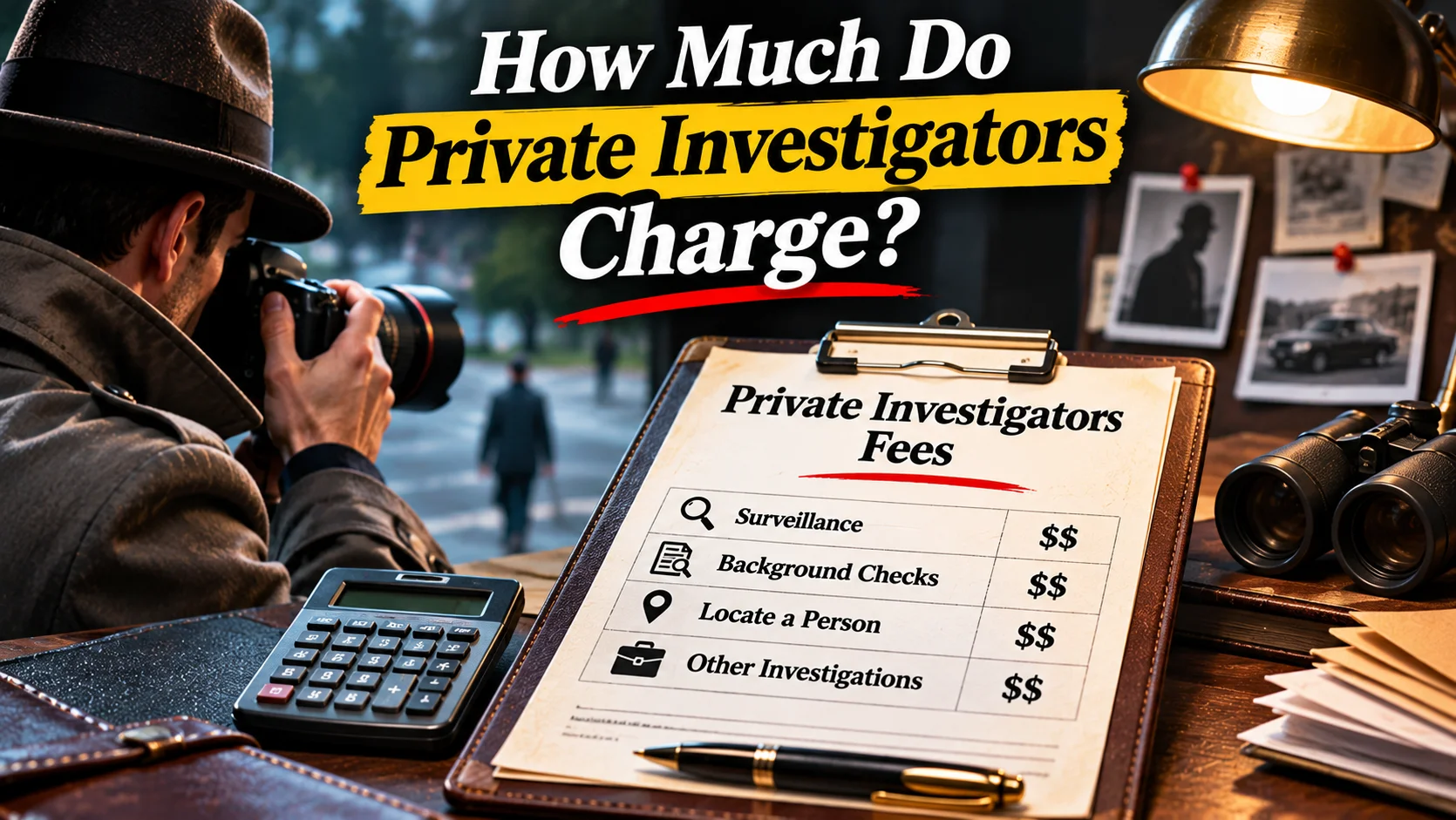
How Much Do Private Investigators Charge?
Private investigators in the United States commonly charge by the hour, by the day, or through a fixed-fee package. The price depends on the assignment, location, investigator experience, number of staff, and expenses. A short records search can cost far less than several days of surveillance. Published pricing guides show a broad range, often around $50 to $200 or more per hour. A 2026 survey of 32 firms across ten major metro areas reported an average quoted rate of $132 per hour and a median of $130. That is a limited sample, not a government price index.
How Much Does A Private Investigator Cost Per Hour?
Many investigators charge hourly for work with an uncertain duration, such as surveillance, interviews, locating a person, field enquiries, and case investigation. A practical planning range is approximately $50 to $200 per hour, although local and specialist rates may fall outside it. The 2026 survey by Michael & Associates reported a $132 average and $130 median among 32 firms in ten metropolitan areas. The survey is described in Michael & Associates’ 2026 private investigator cost analysis.
How Much Does Surveillance Cost?
Surveillance can be expensive because it requires time observing a location or person, travel, waiting, changing locations, documentation, and sometimes video. A single investigator may charge roughly $600 to $1,600 for an eight-hour day, depending on the market. Some firms impose a minimum booking of three or four hours. A second investigator increases the cost but may help maintain visual continuity.
What Do Private Investigators Charge For Common Services?
Fixed fees are more common when a task has a defined scope. A basic background check may cost around $100 to $500, while a deeper investigation can reach several hundred dollars or more. A missing-person locate or skip trace may cost a few hundred dollars, while a difficult investigation can cost much more. Asset searches may range from several hundred dollars to over $1,000 depending on complexity. The U.S. Bureau of Labor Statistics occupational profile reports employee wage data, which is different from agency billing rates.
How Much Does Process Serving Cost?
Routine process serving is often priced as a flat fee, with extra charges for rush attempts, difficult locations, or repeated visits. Ask whether the quote includes the required number of attempts, mileage, affidavits, and filing support. Process serving and private investigation are related but distinct services, and state rules may govern each.
What Factors Change A Private Investigator’s Price?
Location, travel, urgency, specialist expertise, staffing, risk, and reporting requirements affect the quote. Large metropolitan areas may have higher operating costs. Travel between cities or rural locations can add mileage, accommodation, and travel time. Evening, weekend, holiday, and urgent assignments may require surcharges or minimum shifts.
How Do Retainers And Additional Fees Work?
Many agencies request an advance retainer for hourly work. The retainer is applied against future fees and expenses, then reduced as work is completed. Published U.S. guides show retainers from several hundred dollars to several thousand dollars. Ask whether unused funds are refundable, when replenishment is required, and whether approval is needed before exceeding the budget. For a banking payment term, see this explanation of EFT meaning in banking.
How Can You Choose A Private Investigator Without Overpaying?
Check licensing requirements in the state where work will occur. California licensing is handled by the Bureau of Security and Investigative Services, while other states use different regulators. Ask for proof of credentials, insurance where appropriate, relevant experience, and a written scope. Compare equivalent services rather than headline hourly rates. For a separate legal topic, this guide to a first-time gun charge in California explains why jurisdiction-specific advice matters. California clients can verify relevant credentials through the Bureau of Security and Investigative Services.
What Should A Private Investigator Contract Include?
A written agreement should identify the agency, scope, rates, retainer, expense policy, reporting, confidentiality, and cancellation process. Ask for a spending limit and require written approval before exceeding it. Clarify who owns reports, photographs, video, and other work product, and how records will be stored. This guide to getting a public intoxication charge dismissed discusses evidence preservation in a different context.
Can Private Investigators Work Across State Lines?
Licensing and other legal requirements may apply in each jurisdiction. A firm based in one state should explain how it handles out-of-state assignments and whether it uses authorized local investigators. Travel, lodging, local assistance, and coordination can increase the bill.
What Services Should A Legitimate Investigator Refuse?
A legitimate investigator cannot simply hack accounts, bypass passwords, obtain protected phone records without legal authority, or trespass. Ask what lawful sources and methods will be used. Avoid providers who promise guaranteed outcomes or propose unauthorized access.
How Much Should You Budget For A Short Investigation?
A narrow assignment with a clear question may require only a few hours or a fixed-fee search. A surveillance job with uncertain timing can require a larger reserve. Ask the agency to estimate a low, expected, and high scenario. A range is more useful than a single unsupported number because field conditions can change during the assignment.
What Does A Written Investigation Report Usually Include?
A report may summarize dates, times, locations, methods, observations, and supporting photographs or video. Ask whether the investigator records unsuccessful attempts and distinguishes direct observation from information supplied by another source. Clear reporting helps a client and their lawyer evaluate what the work actually established. Confirm whether the fee includes a final report or only raw media.
Can Legal Counsel Help Define The Investigation Scope?
A lawyer can help identify which facts are legally relevant and avoid spending money on information that will not affect the matter. In litigation, counsel may also advise how to preserve evidence and communicate with the investigator. The investigator should still explain the practical methods and costs. Agree on the scope before fieldwork begins.
How Should You Set A Budget For An Uncertain Assignment?
Ask the agency for an estimated range and the assumptions behind it. A short surveillance window may end without useful observations, while a subject’s unexpected travel can extend the assignment. Agree on a maximum spend and require approval before additional hours or expenses. Ask how the agency will notify you when the budget is nearly exhausted.
What Makes An Investigation Report Useful?
A useful report separates direct observations from assumptions and information supplied by others. It should identify dates, times, locations, methods, and the limits of the work. Ask whether the investigator provides original photographs or video and explains how files are stored. Clear documentation helps a client and lawyer assess the reliability and relevance of the findings. A client should also consider whether the intended result is information for personal decision-making, evidence for a lawyer, or material that may be used in court. The purpose can affect the investigator’s methods, reporting format, and required documentation. Explain the intended use before the assignment begins. Ask whether the investigator has experience preparing reports for legal proceedings and whether testimony, travel, or additional documentation would be billed separately.
A client should also consider whether the intended result is information for personal decision-making, evidence for a lawyer, or material that may be used in court. The purpose can affect the investigator’s methods, reporting format, and required documentation. Explain the intended use before the assignment begins. Ask whether the investigator has experience preparing reports for legal proceedings and whether testimony, travel, or additional documentation would be billed separately.
How Can You Reduce Costs Without Reducing Quality?
Give the investigator a precise question instead of requesting a broad search with no defined endpoint. Share relevant dates, locations, names, and documents at the beginning so the agency does not spend paid time collecting basic facts. Ask whether a preliminary records check can determine whether fieldwork is worthwhile. Set a maximum budget and request updates before additional hours are authorized. Avoid paying for duplicate searches or equipment that the investigator cannot explain. A narrower scope can reduce costs while preserving the work that actually answers your question.
Frequently Asked Questions
How Much Does A Private Investigator Charge Per Hour In The US?
Many published guides place common rates around $50 to $200 per hour. A 2026 survey of 32 firms reported a $132 average and $130 median.
Is Surveillance More Expensive?
Often. Surveillance can involve long observation periods, travel, multiple investigators, and written evidence reports.
Do Private Investigators Require A Retainer?
Many agencies require an advance retainer for hourly work. Read the agreement to understand how funds are used and whether unused amounts are refundable.
Can A Private Investigator Guarantee Results?
No responsible investigator should guarantee that a person will be found or that surveillance will capture a particular event.
Are Private Investigator Fees Negotiable?
Some agencies may adjust scope, staffing, or scheduling. Request a written estimate and compare deliverables.
Final Takeaways
Private investigators commonly charge hourly for surveillance and open-ended investigations, while defined tasks may use flat fees. U.S. published rates vary widely, with a 2026 sample reporting an average of $132 per hour. The final price depends on location, complexity, staffing, travel, urgency, and reporting. Check licensing, compare equivalent scopes, read the retainer agreement, and obtain written approval rules for extra expenses.